Talk to an Expert
Talk to an Expert
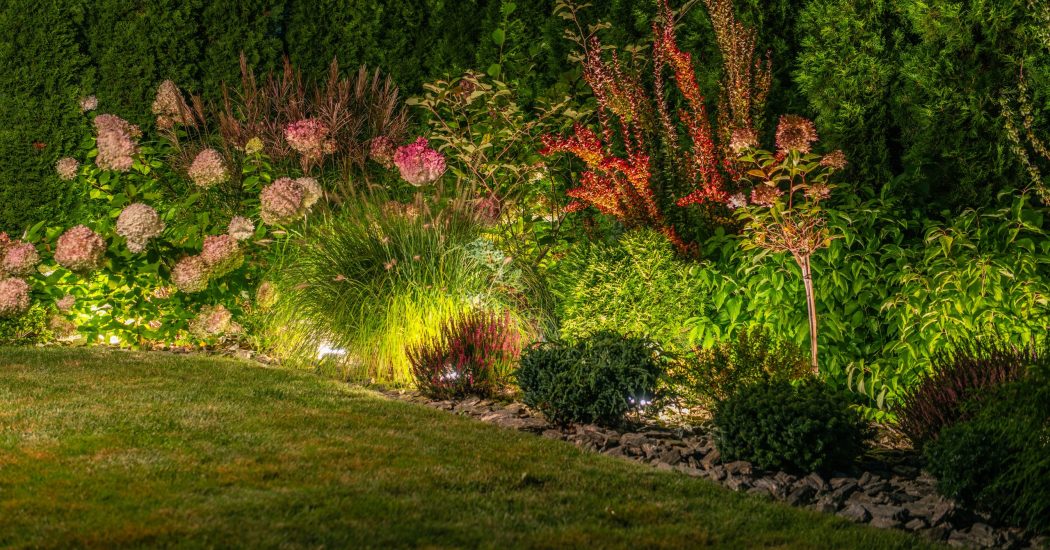
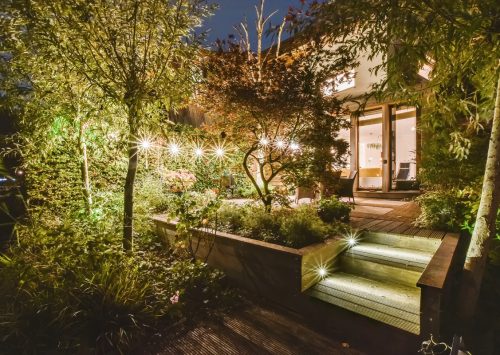
Walk any block in the metro after dark and you can read the history of its outdoor lighting. One yard glows evenly. The next has a path light out, a flickering uplight, and a dark stretch where a fixture gave up two summers ago. The difference is almost never the homeowner. It is whether the system was built for what this climate actually does to it.
Outdoor lighting fails everywhere eventually. Here it fails early, and it fails in patterns.
The city sits in near-constant humidity, takes roughly 62 to 66 inches of rain a year, and spends every summer cycling between downpour and steam. Add storm season on top and the average fixture, connection and transformer works harder in one New Orleans year than in several years somewhere drier.
At TurnKey Lightings, outdoor lighting is all we do, and most of the systems we are called to repair were not badly designed. They were designed for a different climate.
If your own system has dark spots, flickers after rain, or simply died young, contact us and we will take a look at what it needs.
Every part of an outdoor system lives outside all year. In New Orleans that means four specific attacks, running at the same time.
Moisture does not need rain to get into a fixture here. Air this humid finds every unsealed seam, condenses inside housings overnight, and keeps contacts damp enough to corrode year-round.
Corrosion is the quiet killer of outdoor lighting. It does not fail like a blown bulb. It builds resistance slowly, so lights dim, flicker after wet nights, and then die in ones and twos.
Long summers age everything above ground. Gaskets dry out and stop sealing, plastic housings turn brittle and chalky, and cheap finishes fade and pit.
Heat also punishes the electronics. Drivers and transformers shed heat poorly inside baked enclosures, and every degree they run hotter shortens their life.
A New Orleans downpour does not test whether a fixture is rain-resistant. It tests whether a ground-level well light can sit in standing water for an afternoon, because in many yards here it will.
Low spots flood, mulch beds hold water, and anything buried or ground-mounted gets soaked from below, which is the direction most cheap fixtures protect worst.
Wind-driven rain pushes water into angles a normal shower never reaches. Debris strikes knock fixtures out of alignment and crack lenses, and a single flooded junction can take out a whole run.
None of this requires a named storm. An ordinary summer squall line does most of it on a smaller scale, several times a month.
Decades of the same climate produce the same failure map, and it is worth knowing before you spend anything.
The wire-to-wire splices, not the fixtures, are the most common point of failure. A twist-on connector that would live for years in a dry climate corrodes here, especially at or below grade.
When one section of a run goes dark or the whole run dims toward the far end, corroded connections are the first suspect.
 Path lights, well lights and anything in a planting bed take the worst of it. They sit where water pools, where irrigation hits them daily, and where trimmers and mulch work on their seals.
This is exactly where the money pages of a yard live, along walkways and beds, which is why pathway lighting is where cheap systems disappoint first.
Low-voltage systems run off a transformer, and where it is mounted decides a lot. Mounted low, in a flood-prone corner, or in a sun-baked spot with no airflow, it ages fast.
A failing transformer shows up as the whole system misbehaving at once, which at least makes it easy to recognize.
Timers, photocells and smart controls are small electronics living outdoors. Condensation inside a photocell or a corroded timer contact produces the classic symptoms: lights that come on at the wrong time, or randomly, or not at all.
The good news is that every one of those failures has a known answer. Durable outdoor lighting here is not exotic, it is just specified for the conditions.
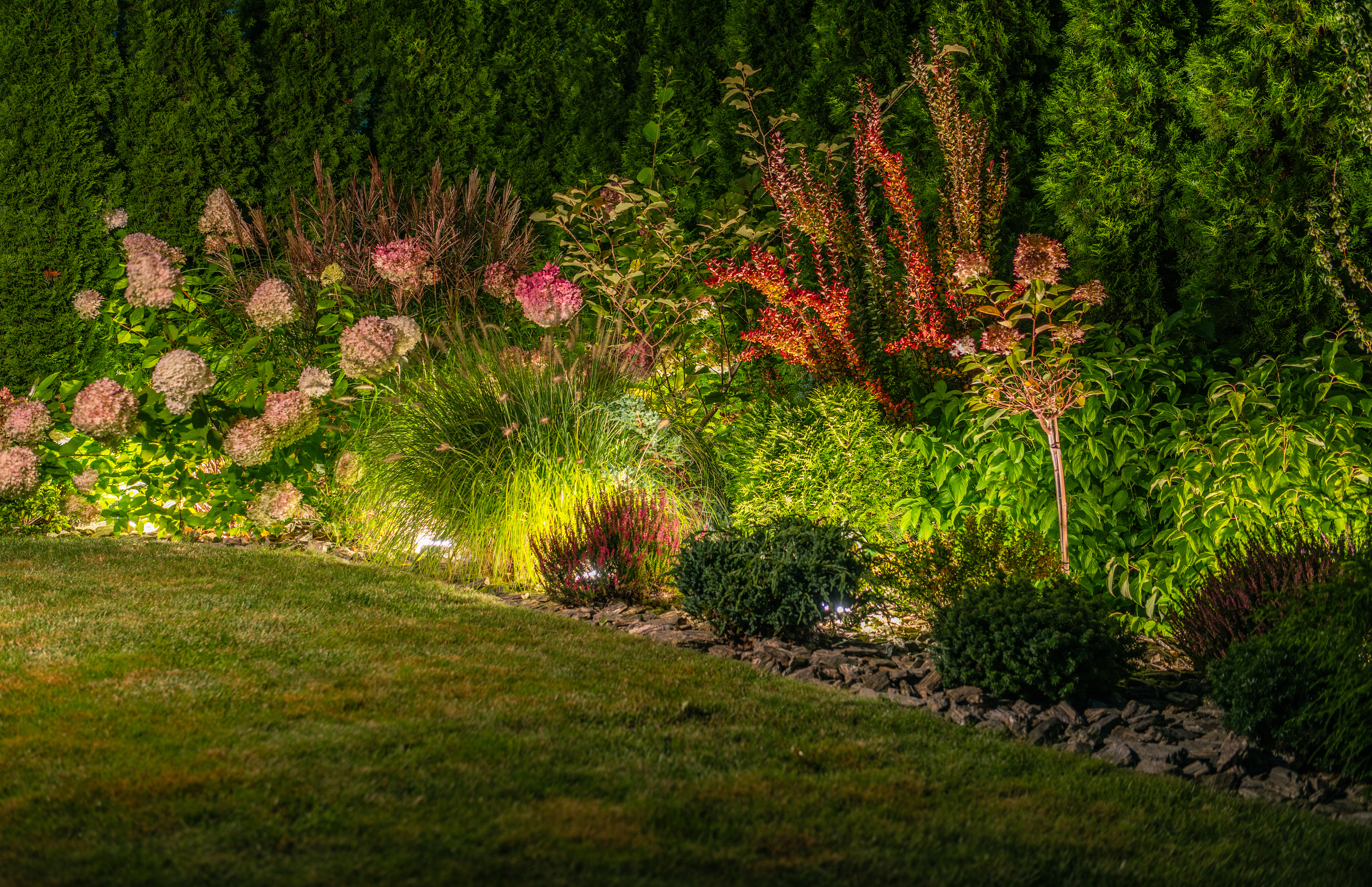 Solid brass and copper fixtures cost more up front and outlast coated aluminum by years in this climate, because they corrode on the surface and then stop. Powder-coated aluminum can do well above grade, but at ground level and near constant moisture, the heavier metals earn their price.
Marine-grade stainless hardware matters too. A brass fixture held on by a screw that rusts is still a failed fixture.
Outdoor electrical gear carries ingress protection ratings, and the difference matters here. A fixture rated only for rain from above is not the same as one sealed against being briefly submerged, and for anything at grade in this metro, the stronger rating is the honest specification.
The same thinking applies to connections: gel-filled, waterproof splices instead of bare twist-on connectors, every time, with no exceptions below grade.
Modern LED fixtures solve several local problems at once: far less heat of their own, lower power draw per run, and long service life. The caveat is that their drivers still hate heat, so fixture placement and enclosure ventilation matter as much as the lamp technology.
For yards, that combination is why quality landscape lighting today is almost always low-voltage LED, built on brass and sealed connections.
Where the wire runs, how deep it is buried, where the transformer hangs, and whether fixtures sit proud of the low spots in a bed, these choices cost nothing extra at install time and decide most of the system’s life. Water always wins eventually. Good installation just makes “eventually” a very long time.
New Orleans yards do not hold still. Subtropical planting grows over fixtures in a season, and a path light swallowed by monkey grass is running hot, lighting nothing, and holding moisture against its housing.
Insects add their own layer. Lights draw them, webs and nests dim output, and warm fixtures make attractive homes, so a good design places and aims fixtures where a quick seasonal wipe-down is actually possible.
The practical answer is a system designed with maintenance access in mind and looked over once or twice a year, the same rhythm as the rest of an exterior in this climate.
A yard full of misbehaving lights rarely needs a full replacement. It needs a diagnosis that starts at the right end.
The pattern of failure points at the cause before anyone opens a fixture. One light out means something local. A whole run misbehaving means the run or its connection. Everything misbehaving at once means the transformer or the controls.
| Symptom | Likely cause | Usual fix |
|---|---|---|
| One light out, rest fine | Lamp, or corrosion at that fixture’s splice | Replace lamp, remake the splice sealed |
| A whole section dark or dim | Failed connection or cut cable on that run | Trace the run, repair with waterproof splices |
| Lights dim toward the end of a run | Voltage drop from an overloaded or corroded run | Rebalance runs at the transformer |
| Flicker after rain, fine when dry | Water reaching a splice or fixture seal | Find the wet point, reseal or replace it |
| Everything misbehaving at once | Transformer, timer or photocell | Test the controls, replace what fails |
Repair wins when the failures are concentrated: a handful of corroded splices, one flooded fixture, a tired photocell. Replacement starts to win when the failures are distributed, because a system corroding at every connection is announcing that its parts were wrong for the location, and per-point repair just meters out the same cost over two more years.
Two honest rules sit under that table. First, anything involving the home’s mains wiring belongs with a licensed electrician, full stop. Second, a system that fails repeatedly in the same spots is telling you it was specified wrong for its location, and re-repairing it with the same parts just schedules the next failure.
Deck and porch systems deserve one extra note: they combine wood movement, foot traffic and weather, so fixtures and wiring there need mechanical protection as well as sealing, which is a core part of how deck and patio lighting should be built in this market.
Every dark path light and flickering uplight in the metro traces back to the same root: a system specified for an average climate installed in a place that does not have one. The fixes are not secrets. Better metals, sealed connections, immersion-rated gear at grade, heat-aware placement, and an installer who assumes water will win a few battles.
Built that way, an outdoor system here is not a maintenance burden. It runs for years, survives storm seasons, and actually delivers the curb appeal and safety it was bought for.
It is also usually the cheaper path over time, since a budget system replaced twice costs more than a properly specified one installed once, and that math gets worse every time a corroded splice takes an evening of troubleshooting with it.
If your lighting has been dying young, or you are starting fresh and want it done once, our team at TurnKey Lightings designs and installs systems for exactly this climate. Call us at (504) 688-7205 and we will walk your yard with you.
Why do my outdoor lights keep failing after every summer?
Because summer here is the stress test: constant humidity corroding connections, heat aging gaskets and drivers, and downpours soaking ground-level fixtures from below. If the failures repeat in the same spots, the system was likely specified for a milder climate, and the fix is upgrading those points rather than replacing lamps again.
Are solar path lights worth it in New Orleans?
They are the most affordable entry point, and also the shortest-lived category in this climate, since their batteries, seals and plastics take the same abuse with less protection. For lighting you rely on every night, a low-voltage wired system is the more durable answer here.
What is an IP rating and does it matter?
It is the standard ingress protection code on outdoor electrical gear, describing how well the housing keeps out dust and water. It matters most at ground level in this metro, where a fixture may briefly sit in standing water, so gear rated only for rain from above is under-specified for the location.
Is LED really better for outdoor use here?
Yes, on heat, power draw and lifespan. The caveat is that LED drivers are still electronics and still dislike heat, so placement and ventilation decide whether you get the long life the technology promises.
Can I fix corroded connections myself?
On a low-voltage landscape system, a careful homeowner can remake splices with gel-filled waterproof connectors. Anything on the home’s mains wiring, including the circuit feeding the transformer, belongs with a licensed electrician.
How long should a professionally installed system last?
Specified for this climate, the buried wiring and brass fixtures are the long-lived part of the system, with lamps and controls replaced along the way as consumables. The systems that die in two or three years almost always failed at connections, seals or the transformer, not at the fixtures themselves.
Do storms mean I should skip uplighting near trees?
No, but it changes the spec. Tree-mounted and near-tree fixtures need shielded cable runs, strain relief and seasonal checks, because wind moves everything they attach to. After any major storm, a quick system check is worth it even if everything still lights.
Does outdoor lighting survive a flooded yard?
Immersion-rated fixtures and sealed splices routinely survive brief standing water, which is exactly why they are the right spec at grade here. A system that flooded and now misbehaves should be checked point by point rather than written off, since the damage usually concentrates at a few connections.