Talk to an Expert
Talk to an Expert
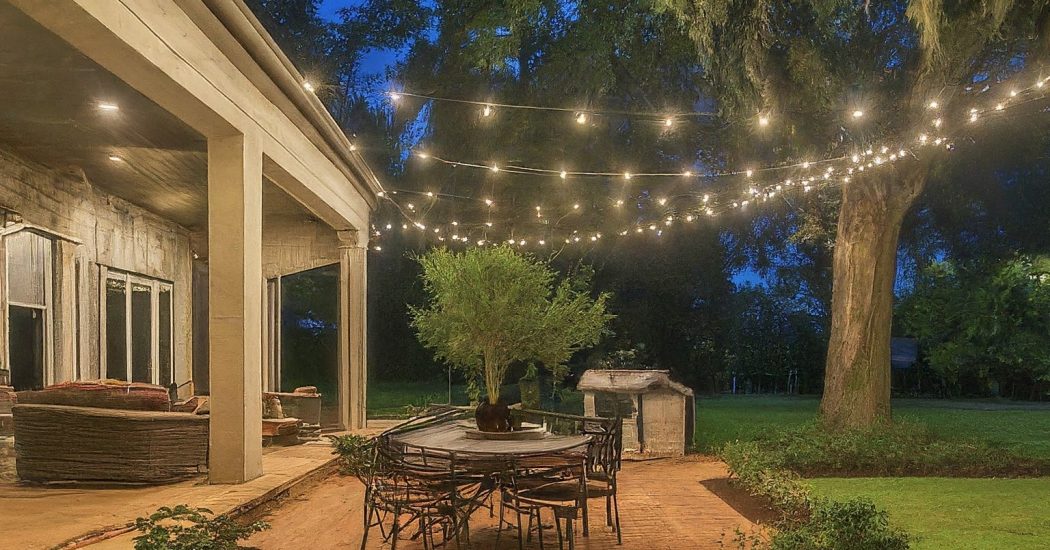
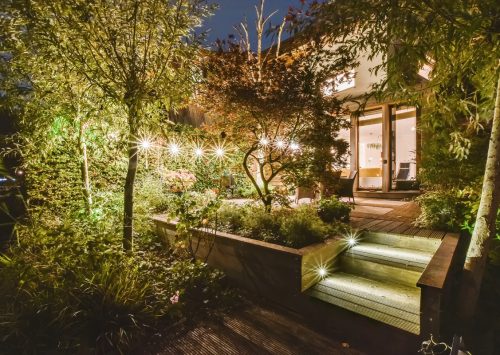
Most deck and patio lighting fails for the same reason: it gets picked for looks first and figured out for safety and function later, if at all.
A deck or patio in New Orleans gets used most of the year, not just a few warm months, which means the lighting on it earns its keep or it does not. If you are planning a build, an update, or you just moved into a house with a deck that goes dark the second the sun drops, you have probably already noticed that most advice online is a photo gallery, not a plan. A dozen product photos of string lights and fire pits does not tell you what your specific deck actually needs, or in what order. Let’s break down what actually earns its place on a deck or patio, and what does not.
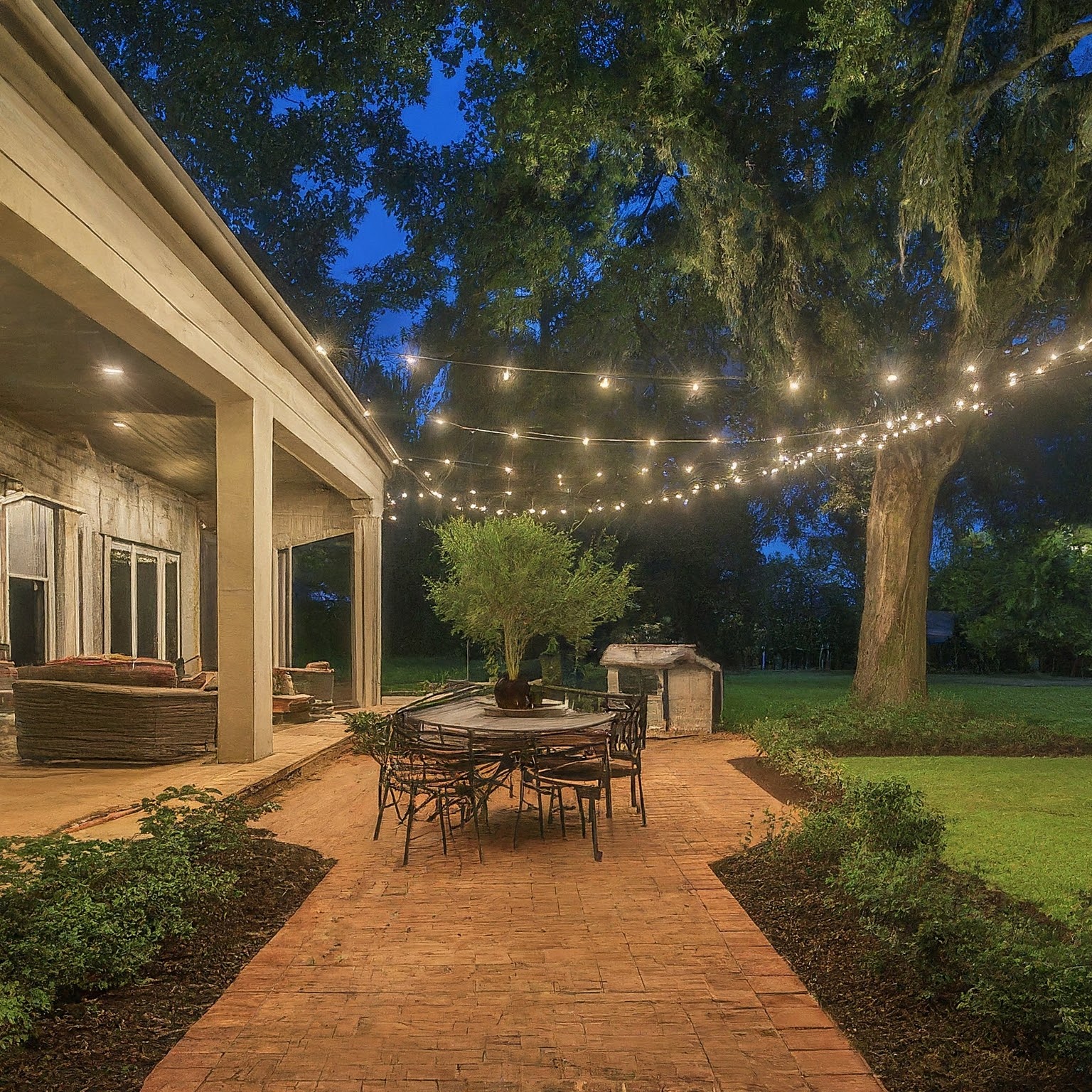
A handful of fixture types do almost all the real work on a deck or patio, and the rest is decoration layered on top. Here is the short list worth knowing before you shop for anything.
Small fixtures set flush into the deck boards or the stair risers themselves. These are the fixtures that keep someone from missing a step in the dark, which matters more than it sounds like it should on a deck with any change in elevation at all. Low output, wide spacing, and they run all night without looking like an airport runway. They are also the fixture most people skip in the planning phase and regret skipping the first time a guest misses a step in the dark.
Fixtures that sit on top of railing posts or along the rail itself. These do double duty: they mark the edge of the deck (so nobody steps off where they should not) and they add a low, even glow along the perimeter without a single bright hot spot anywhere. On a raised deck especially, this is the layer that tells a visitor where the edge actually is before they get close enough to need to know the hard way.
A pair of sconces flanking a door or a built-in bench does more to make a seating area feel finished than almost anything else on this list. This is the fixture type most people reach for last, when it should probably be closer to first for anywhere people are actually going to sit. The difference between a deck that looks like an afterthought and one that looks planned is usually this one fixture choice, not a bigger overall lighting budget.
At TurnKey Lightings, we design deck and patio lighting around this exact hierarchy, safety fixtures first, then the pieces that make the space feel like somewhere you would want to sit down.
Real talk: bad deck lighting is rarely about a bad fixture choice. It is usually fixtures picked before anyone actually walked the space at night to see what it needed.
Before a single fixture gets chosen, walk the deck or patio after the sun is down, on a night with no porch light or string of temporary lights turned on. The dark spots you actually notice, the step you cannot quite see, the corner where the seating disappears, those are the fixtures you need. Everything else is optional. This one walk does more planning work than an hour of scrolling photos, because it is your actual deck instead of somebody else’s.
Step lights and rail lights are not optional and they are not really a style choice. They go in first, and the ambiance layer, string lights, uplights, a sconce or two, gets added around them, not instead of them. A deck that skips the safety layer and goes straight to string lights usually looks fine in a daytime photo and feels wrong the first time someone actually uses it after dark.
Some decks already have a run of low-voltage wiring from a builder or a prior owner, and some have nothing. That single fact changes what a lighting plan can do without opening anything up, so it is worth knowing before you get attached to a specific layout. A deck with existing wiring can often add fixtures along that same run for far less than starting from scratch, and a deck with nothing yet has a clean slate, which is its own kind of advantage if the plan gets made before anything goes in the ground.
If you want that walk-through done for you, contact us and we will look at the actual space instead of a stock photo of one, whether you are in New Orleans or out in Metairie.
Here is the thing most guides skip entirely: a deck or patio is rarely one space, it is two or three zones that happen to share a floor. A cooking or grill area, a seating area, and the stairs or steps connecting it all to the yard, and each one wants a different kind of light doing a different job.
The cooking zone wants brighter, more direct light, close to task lighting in how it behaves, because nobody wants to grill by ambiance alone. The seating zone wants the opposite: lower, warmer, indirect light that lets people actually see each other without feeling like they are on a stage. The stairs are their own decision entirely, covered under step lighting above, and they do not get to borrow brightness from either zone next to them.
Treating all three as one lighting decision is a common mistake, and it is also an easy one to fix once someone points it out. Splitting a deck into its real zones, then lighting each one for what actually happens there, is most of what separates a deck that looks designed from one that looks like a string of lights got added at the end.
A New Orleans deck also gets a long real season, mild winters mean people are out there more months of the year, not fewer, so a zoning decision made once tends to get used a lot more than the same decision on a deck that only sees three or four months of real evening use. That is one more reason it is worth getting the zones right the first time instead of patching the lighting plan a piece at a time.
A deck or patio does not need every fixture on this list. It needs step and rail lighting for safety, a sconce or two where people actually sit, and a zoning decision that treats the cooking area, the seating area, and the stairs as three different jobs instead of one. Everything past that is preference, not requirement.
That order matters more than the brand of fixture, the exact color temperature, or whether the string lights are warm white or something fancier. Get the safety layer and the zoning right first, and the rest of the decision gets a lot easier, because you are filling in a plan instead of guessing at one from scratch. Skip straight to the string lights and a sconce or two, and you end up with a deck that photographs fine and still does not quite work once people are actually standing on it after dark.
If a hard-wired outlet or a breaker needs to move to make any of this work, that part is a job for a licensed electrician, not a lighting decision. We will tell you plainly when that is the case rather than working around it.
If you are staring at a deck or patio trying to figure out what it actually needs, at TurnKey Lightings we would rather walk it with you than guess from a photo. Call us at (504) 688-7205 and we will tell you straight what is worth doing and what is not.